A Closer Look at Pixelmojo: Radar, Vector and Hive
Lloyd Pilapil, founder of Pixelmojo, and Scout, the guide to Radar, take a closer look at Radar, Radar Sites (a visual website builder in development), Vector and Hive.
Lloyd and Scout explain how AI describes a business with Radar, how Vector qualifies leads and how Hive hands work between AI agents and people. Each video has its full transcript.

Lloyd Pilapil, founder of Pixelmojo, and Scout, the guide to Radar, take a closer look at Radar, Radar Sites (a visual website builder in development), Vector and Hive.
Lloyd and Scout walk through content graphs: how vector search finds content with a similar meaning, how a graph makes relationships explicit, why both still need good information and evidence, and how Pixelmojo uses both in structured data, Related Reading and answers grounded in relevant content and source URLs.
Lloyd and Scout walk through how Vector qualifies an inquiry: start from the conversation, keep the evidence and the unknowns visible, apply criteria your business sets, keep the reason beside the decision, and give the seller a useful handoff.
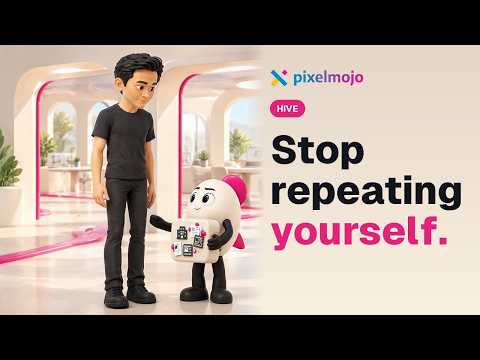
Lloyd and Scout follow one customer request through Hive: specialized agents around shared customer context, handoffs that carry ownership, a person for uncertain cases, visible work, and a staged rollout.
Lloyd Pilapil, founder of Pixelmojo, introduces Radar, Radar Sites, Vector and Hive in one minute.
Scout, the guide character in the Radar videos, walks through one real finding from the public Radar sample report: AI engines describing a different, same-named company. It covers the evidence, who owns each step of the fix, and how to recheck.
Scout asks whether AI gets your business, spots a gap in how AI describes a business, and notes what to check next.
When buyers ask ChatGPT, Claude, Perplexity and Gemini to compare options on budget, fit and proof, does your business make the shortlist?
Scout shows how an agency can answer a client's question, what should we fix first: inspect how AI describes the business, review the evidence, choose one practical change, then check again.
A website loading and an AI answer describing the business are two different things to inspect. Scout explains how to match the next check to the client's question: inspect page access when that is the concern, and read the sampled answer and its prompt to understand the description.
When AI answers about a business point in different directions, Scout follows the clue, checks the evidence and picks one practical next check. A 55-second animated teaser for Radar, with sound effects only.
An AI answer calls a Jeddah dive business "professionals only", yet it welcomes beginners. Scout follows the case from the Riyadh Metro to the Red Sea: ask the way a customer asks, compare the answer with its sources and the business's own pages, then pick one priority to review and check again. Spoken in Saudi Arabic with English subtitles.
Scout walks through Radar in one minute: start a free check with your domain, email and a six-digit code, see what the six technical checks cover and what the paid 13-tool audit adds, follow the evidence behind a finding in the public sample report, then plan a fix with your team and check again.
Lloyd and Scout explain decision-stage AI visibility: when buyers ask AI which agency to choose, does your business make the shortlist? Radar's three steps check whether AI can read your site, sample what AI answers say about you with the evidence behind each answer, and hand your team a suggested fix for each finding. Your team makes the change and checks again.
AI didn't mention your business. Lloyd and Scout look at one dated Radar finding: in a share-of-voice check on 25 September 2026, Pixelmojo wasn't detected in 20 usable answers from four AI providers, for questions about AI visibility audit platforms. Before changing anything, check the questions, read the answers, see which businesses and evidence appeared, and compare the questions with what customers actually ask. Then make a useful change, check again and record what changed.
AI says an agency is the “best.” Best for which customer? Lloyd and Scout turn a vague “best” into a question you can check. Start with a real customer and what they need: a website launch, a small team, and a site that has to work with their CRM. Put those needs in the question, then inspect the answer: does the recommendation fit, what supports that, and what's still unknown? Keeping the question and the evidence together gives you a useful starting point, not a final verdict.
No videos match that search.
Run Radar's six free technical checks on your domain, then follow the evidence behind each finding.